Running a brand shouldn't mean running ten different tools
Big brands solve this with in-house systems and an ops team. Small brands get spreadsheets — and spend more time managing tools than making product.
Spreadsheets everywhere
Product tracking, costing, orders — all in separate sheets that never quite stay in sync.
Files scattered across folders
Tech packs in Dropbox, brand assets in Google Drive, sample photos in WhatsApp. Nothing is where you expect it.
Tasks in generic tools
Notion, Asana, Trello — none of them understand what a tech pack is or how a sampling round works.
No single source of truth
Your team is working from different versions of the same information. Decisions get made on outdated data.
Rising software costs
You're paying for five tools that each do one thing. The total adds up fast for a small team.
Disconnected workflows
When a product changes, nothing else updates automatically. You're manually keeping everything in sync.
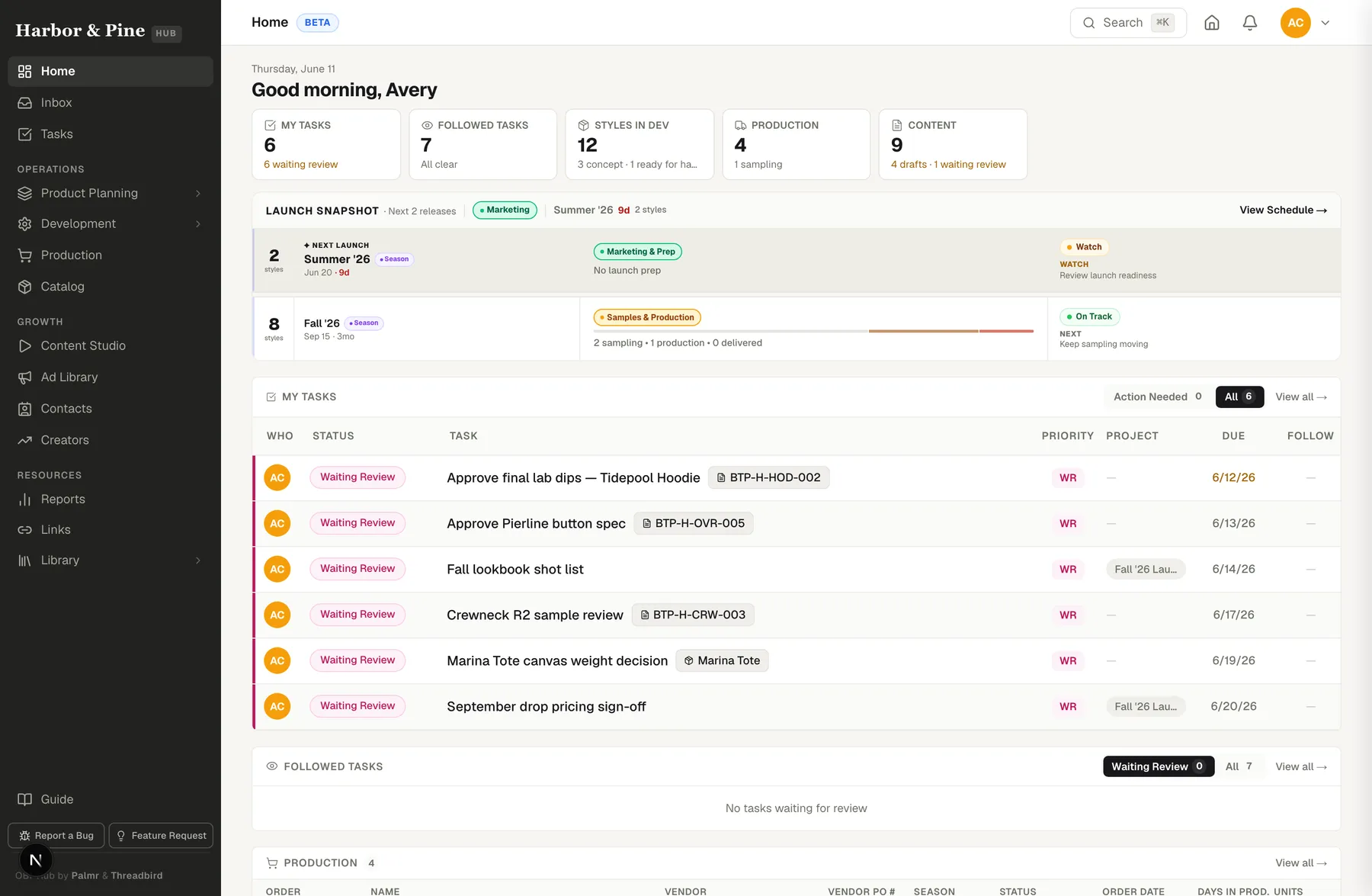
Everything your brand needs, actually connected
Obi-Hub is not another project management tool with a new coat of paint. It is the operational backbone a 300-person apparel company has — product development, production tracking, content ops, partner portals — rebuilt at the scale and price of a 3-person brand.
When a product moves through development, your tasks, files, and samples move with it. When an order is placed, it links back to the product. When a sale happens on your store, it shows up in your reports. Everything stays in sync because it was built to work together.
The platform
Seven surfaces. One Brand Interface.
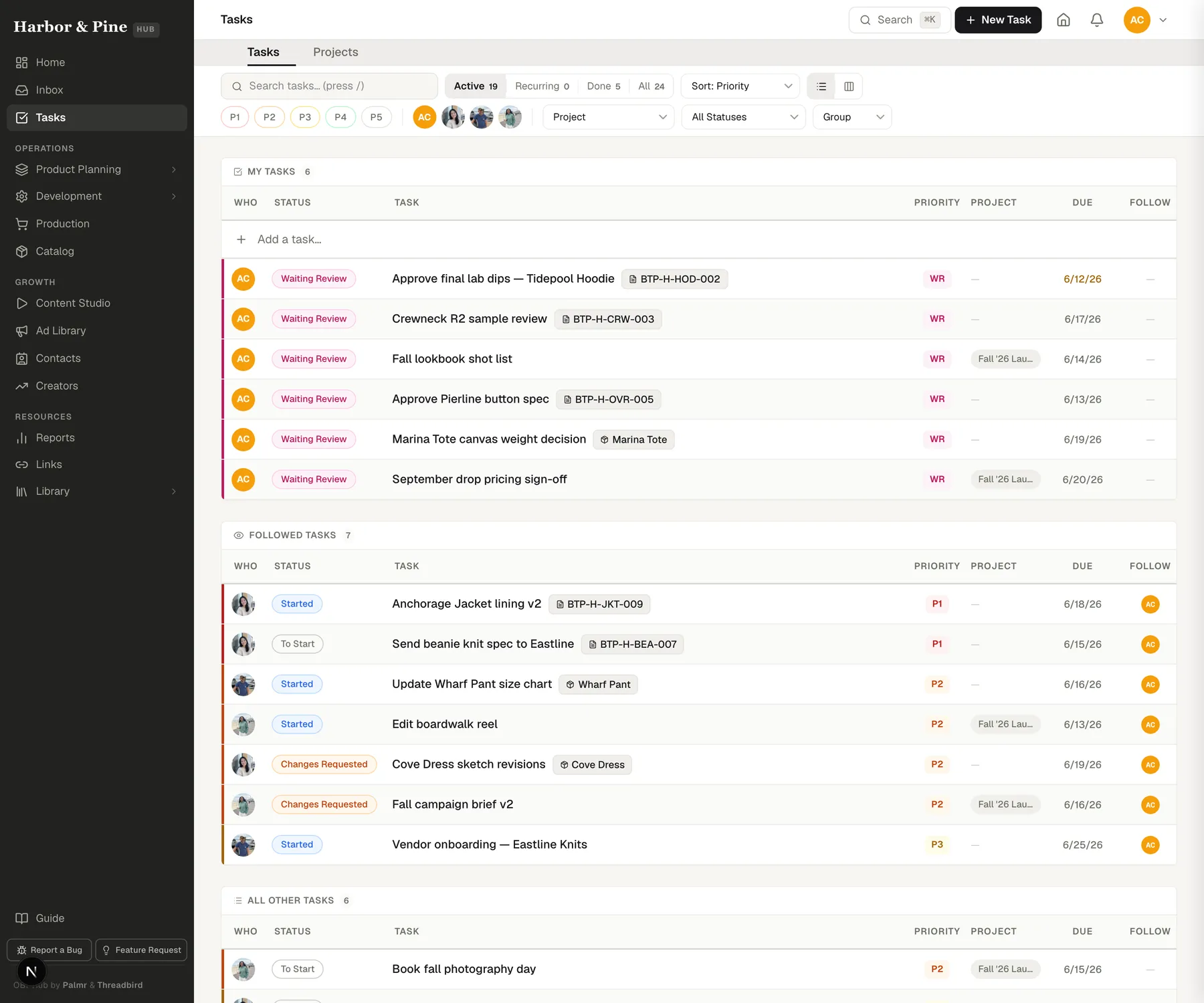
It's in the name — OBI stands for One Brand Interface. Every part of Obi-Hub is built around how clothing brands actually operate, and everything connects back to the product.
Every style, sketch to shelf
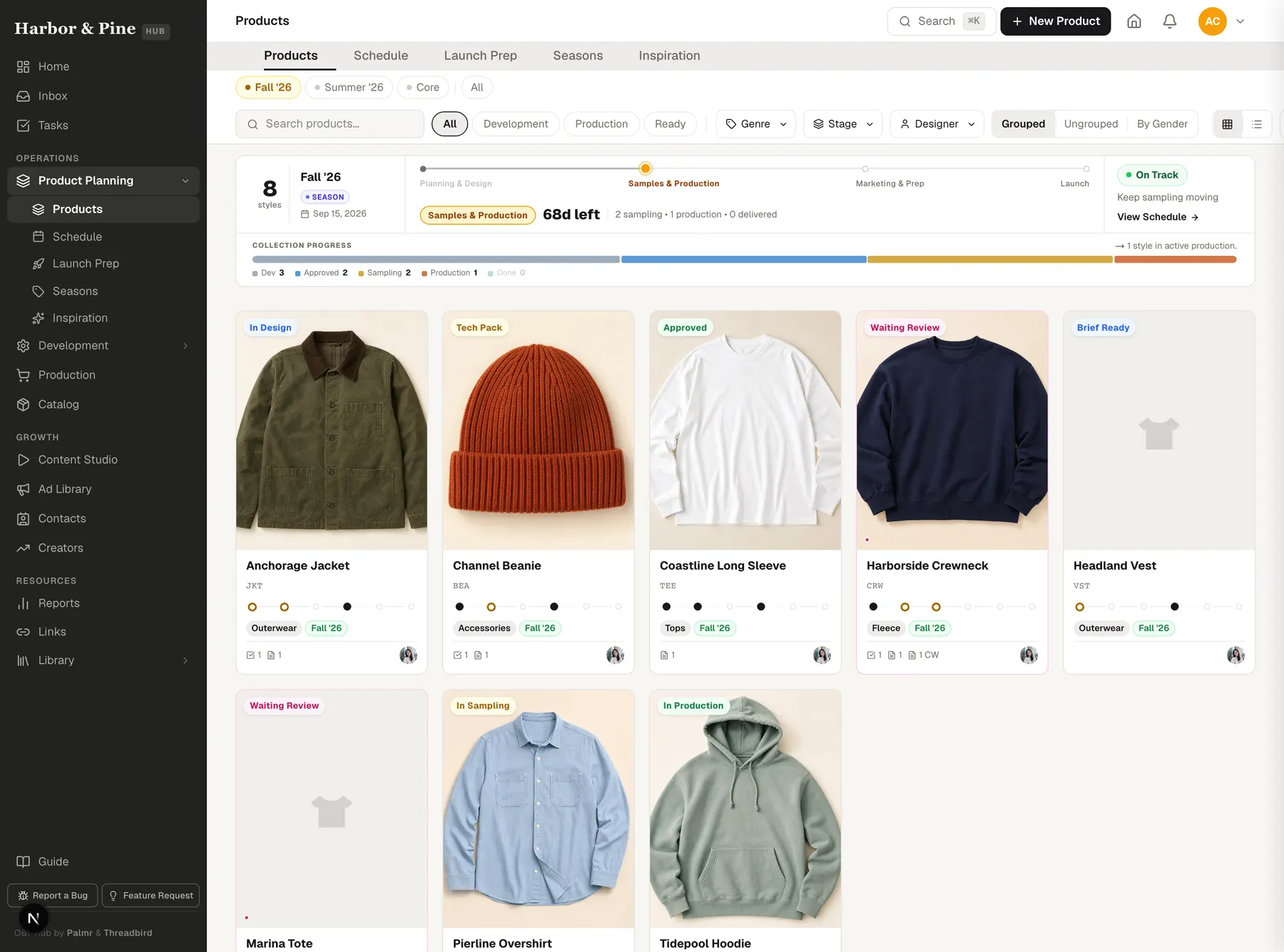
A visual board of every product in your line, organized by season, stage, and status. Each style links to its tech pack, colorways, samples, and tasks.
Versioned files, tied to products
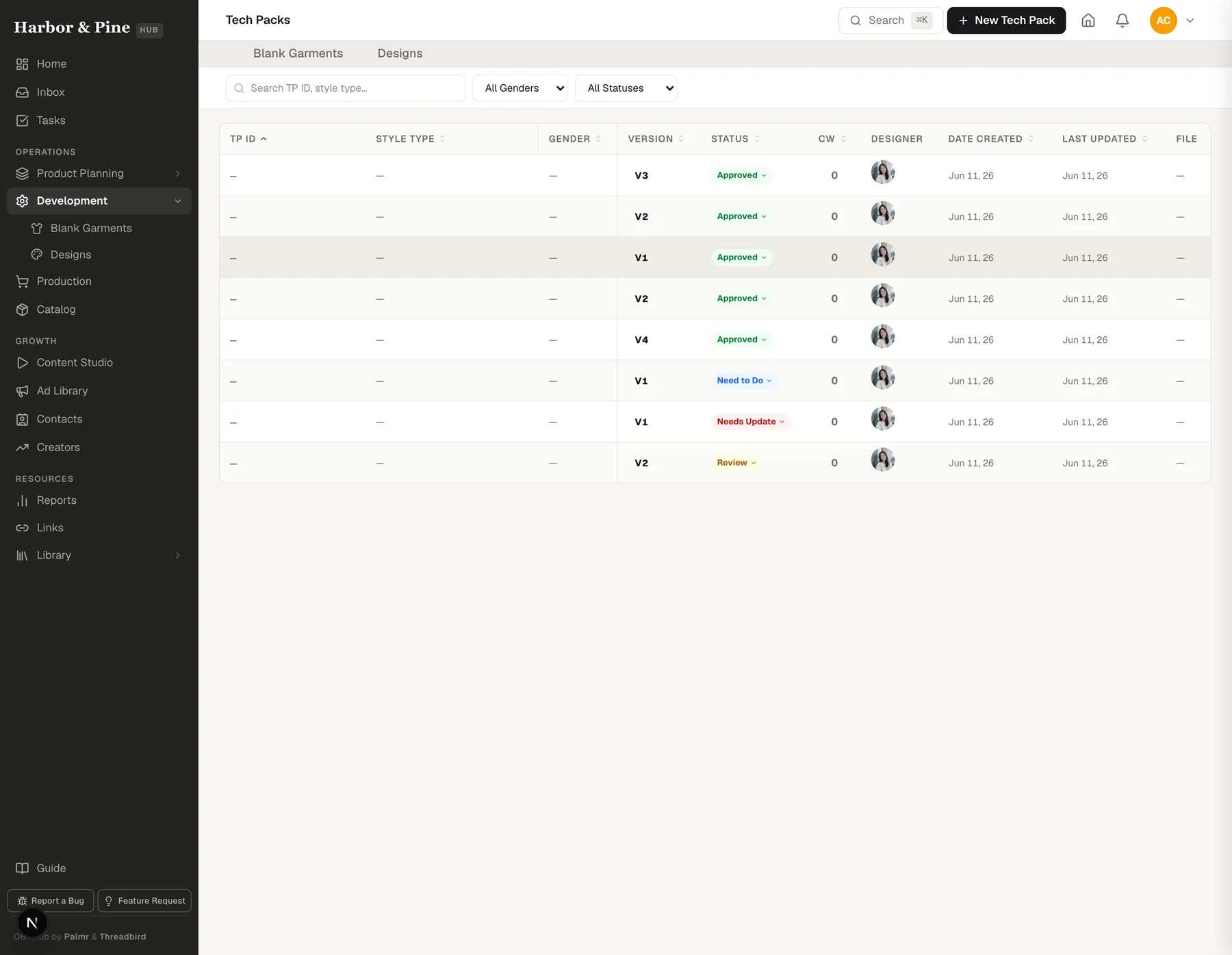
Tech packs, colorway sheets, and design files — versioned, approved, and linked to the styles that use them. No more digging through Dropbox.
Tasks that understand apparel
Every task attaches to something real — a product, tech pack, order, or content card. Your inbox surfaces exactly what needs you and why.
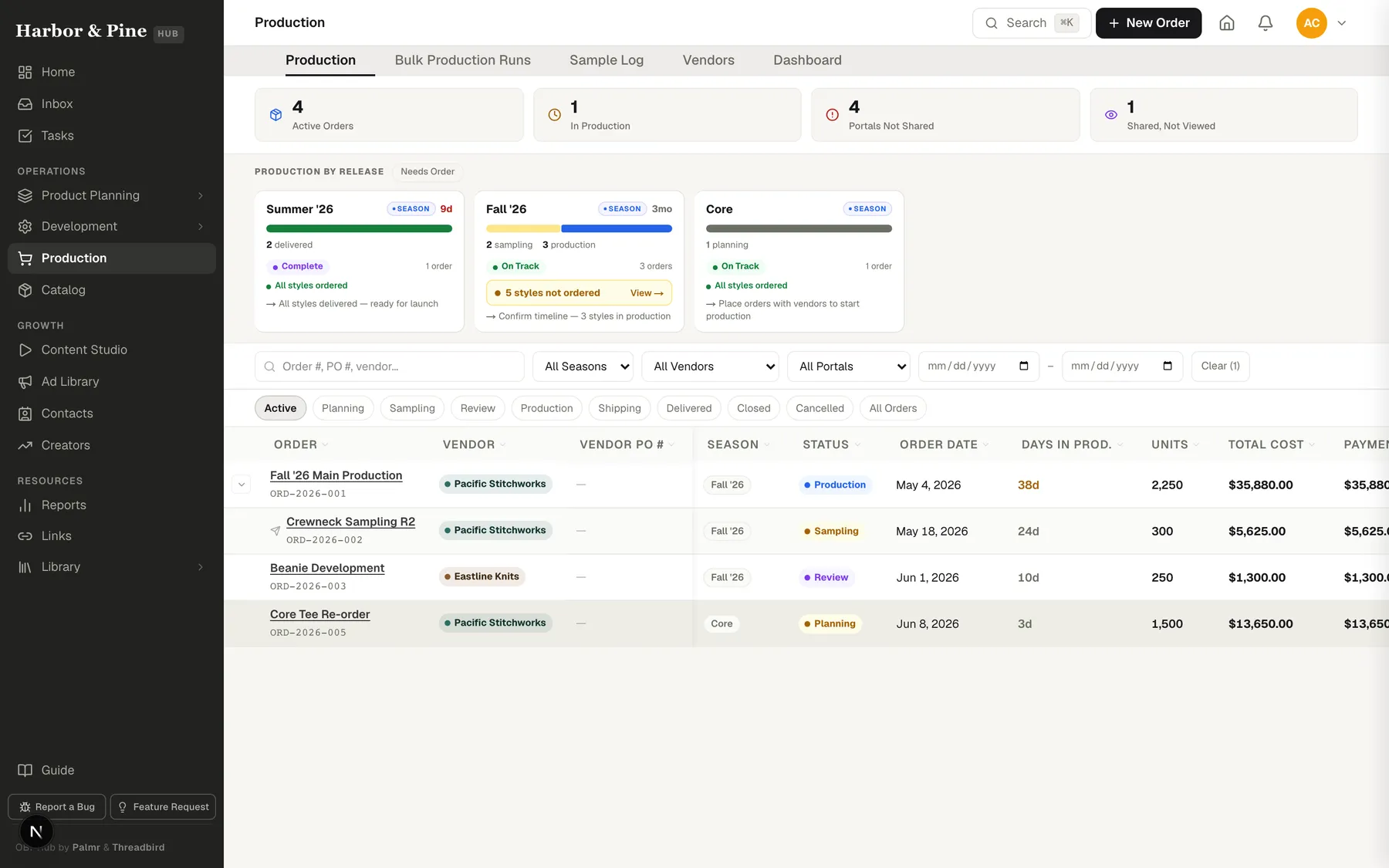
Production across every factory
Log production orders, track delivery, and share a tokenized link with each vendor so they can see files and update status — without seeing the rest of your business.
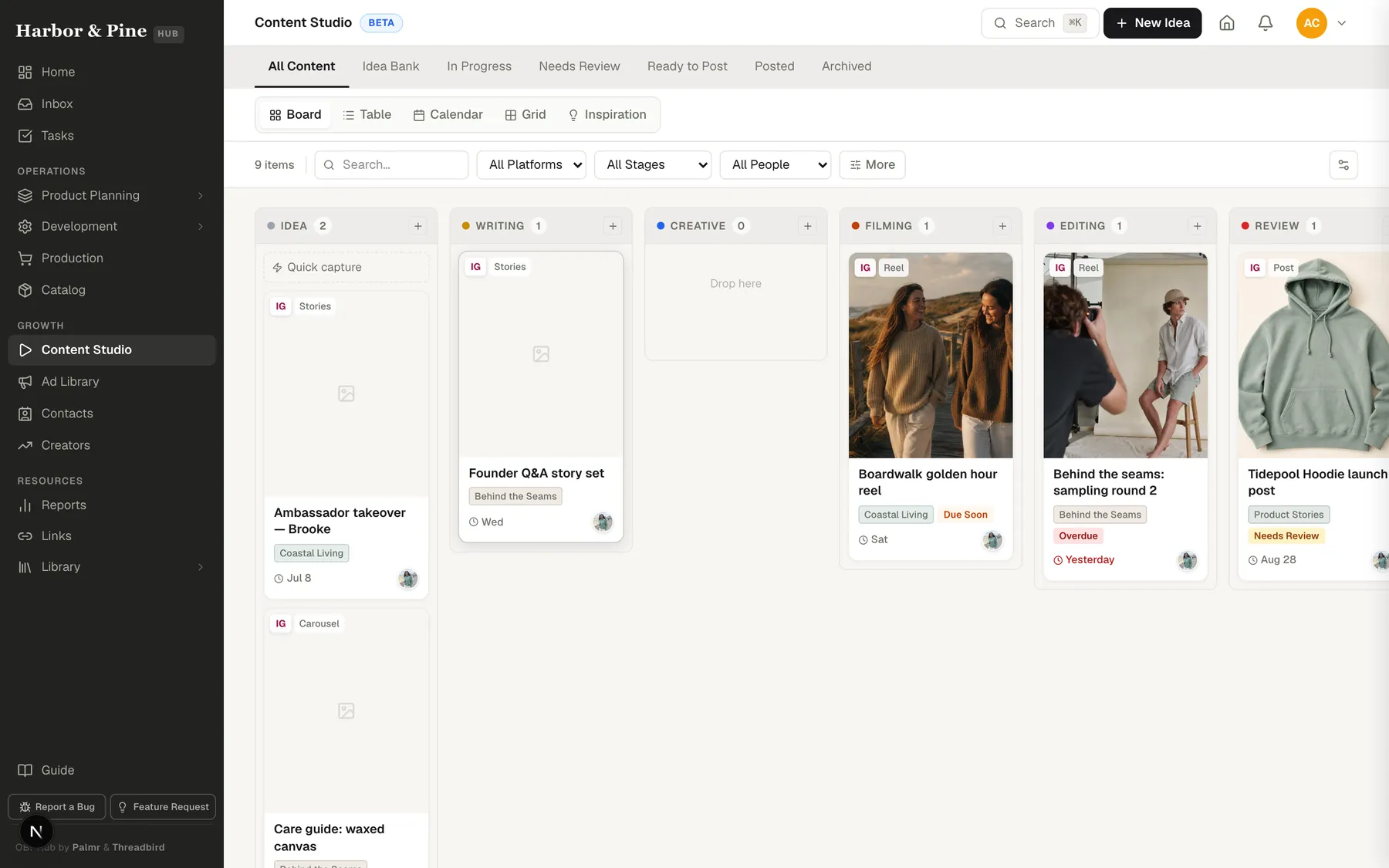
From idea to Instagram
A complete content pipeline — brief, write, film, edit, approve, schedule. Live Instagram preview rendered with your brand’s color and handle so what you approve is what posts.
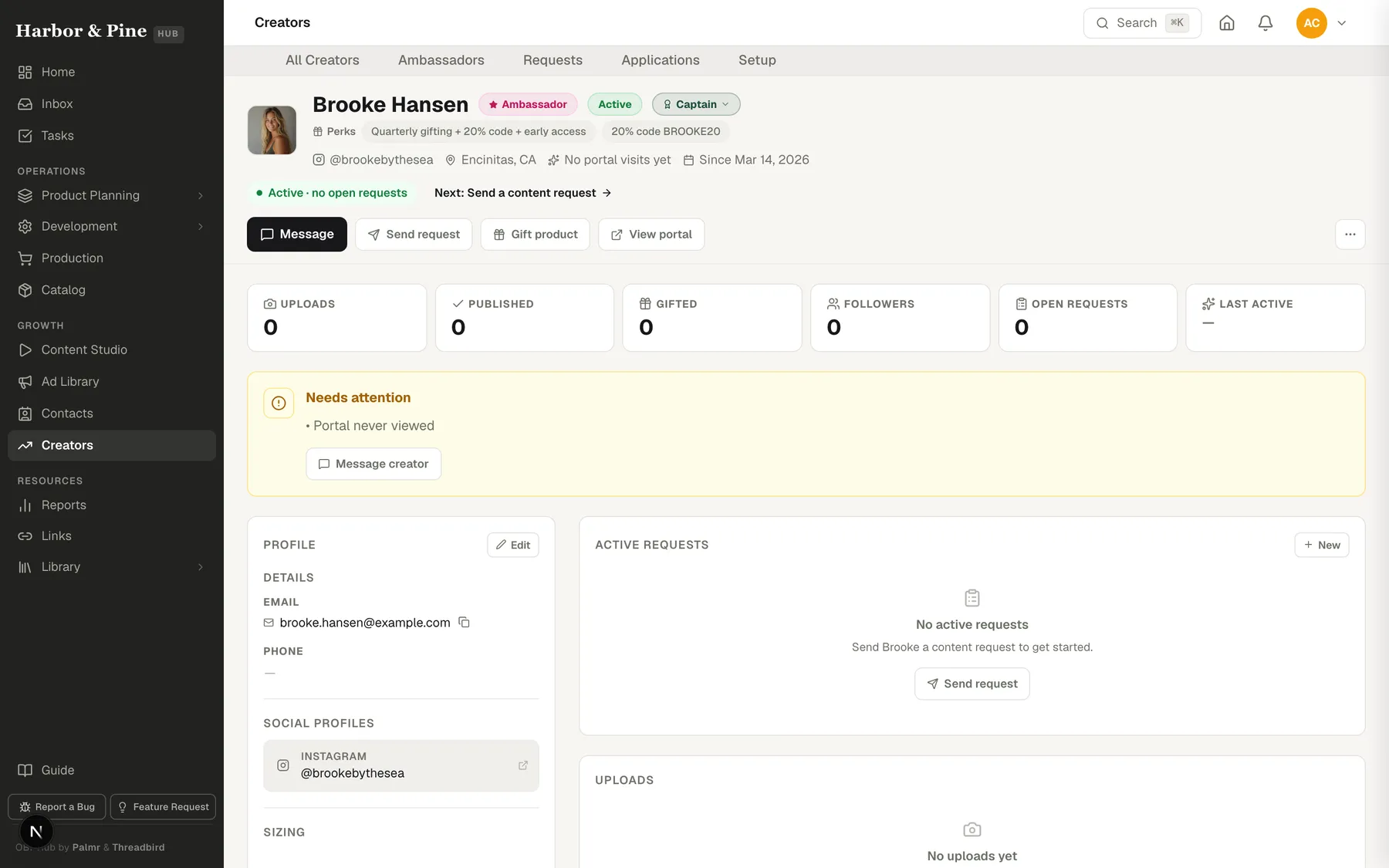
Their own login, not a spreadsheet
Ambassadors get a branded self-serve portal — see assignments, upload content, message you. You see everything in one feed.
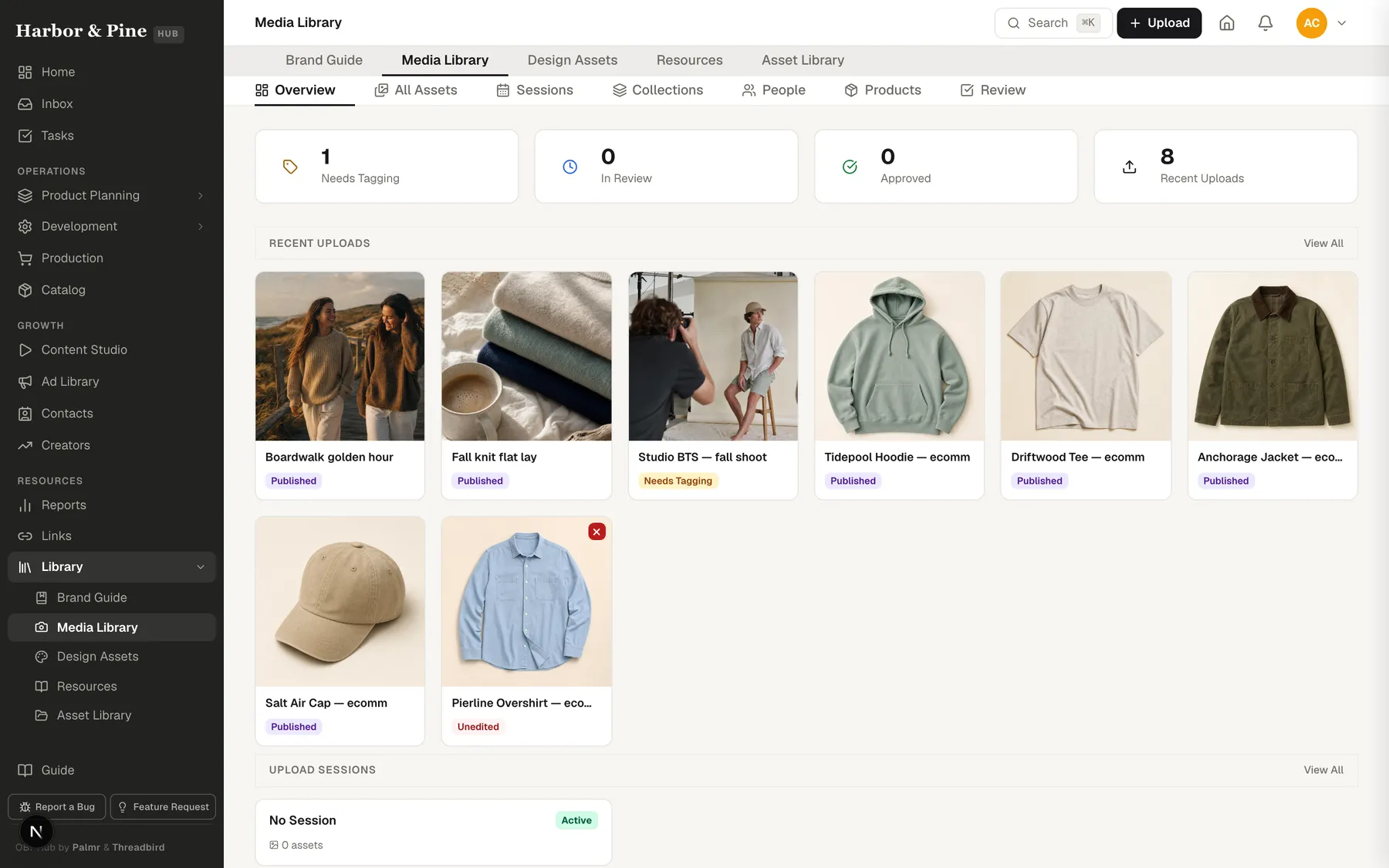
One source of truth
Brand guide, photography, knowledge base, and resources — organized for your team, ambassadors, and vendors. Stop pasting Dropbox links.
Content Studio
Write, schedule, and see exactly how it'll look
A complete editorial pipeline — briefing, writing, creative direction, filming, editing, review, and scheduling — built into the same workspace as your products.
Every content card has a live Instagram preview rendered with your brand's accent color and handle. What you approve is what your followers see. Tie posts to the styles they promote, hand off filming to the right person, and never lose a caption to a Slack thread again.
Ambassador Portal
Give your ambassadors their own login
Send products, collect content, and track every collaboration in one place. Your ambassadors get a clean, branded portal where they can see assignments, upload deliverables, and message you directly.
No more shared spreadsheets, no more email chains, no more wondering whether the next drop's content is ready. The activity feed shows you what every ambassador is doing, and uploads land in your library tagged to the right product.
Vendor Portal
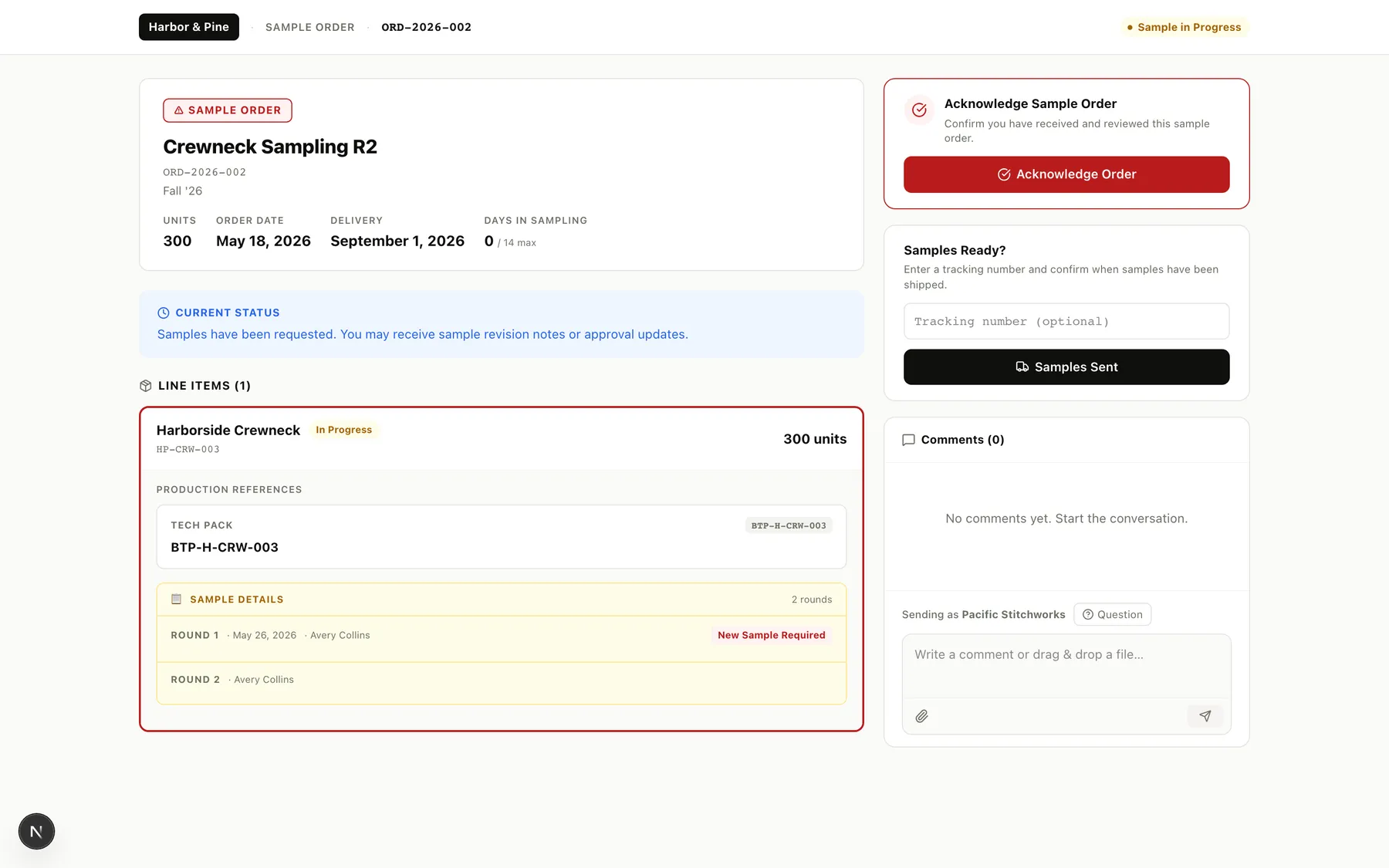
Share an order link. They see what they need, nothing else.
Production runs live in Obi-Hub, but your factory doesn't need a full login to participate. Generate a tokenized share link for any order — your vendor can view files, post comments, and update milestones without seeing the rest of your business.
No more emailing tech packs back and forth. No more chasing for status updates. The vendor portal is scoped to the order — they see exactly what they need to deliver, and you see every comment and file in the same place as the rest of the production thread.
Connected to commerce
It talks to your store, too
The same workspace that runs your production also knows what's selling. Connect Shopify once and your catalog, orders, and sales flow into the picture.
Shopify Sync
Connect your store and your product catalog pulls in automatically. Link Shopify listings to the styles they came from, and orders sync daily.
Reports & Insights
Production reports, sales metrics, and goal tracking — computed from the same data the rest of your workspace already runs on.
Workflows Notion and Asana can't fake
This is the discipline big apparel brands run — sample rounds, approval gates, version control — without the enterprise software or the ops headcount. The structure isn't configurable, it's baked in.
3-round sample review
Approve, reject, or request changes on every sample round. Escalate after round 3 — without losing the thread.
14-stage product journey
From idea to live on site. Always know exactly where every style is in development and production.
Versioned approval gates
Upload a new tech pack version and the status flips back to review automatically. No manual chasing.
Tasks that attach to anything
A single task can attach to a product, tech pack, colorway, order, or content card — whatever it actually relates to.
Stop managing tools. Start running your brand.
See every feature in detail, or apply now and we'll walk you through it with your own products.

“We built Obi-Hub because we were living the problem ourselves. Spreadsheets for products, Dropbox for files, Notion for tasks, WhatsApp for everything else. Nothing talked to anything. We kept losing track of where things were and who was doing what.”
Obi-Hub started as an internal tool — built to solve the operational chaos of running a small clothing brand. We needed something that understood how apparel actually works: product stages, tech packs, sampling rounds, colorways, manufacturing orders, content drops, ambassador campaigns.
After building it for ourselves and using it every day, we realized other small brands were dealing with the exact same fragmented stack. So we're opening it up. Obi-Hub is now being built for every small brand that deserves better tools than a folder full of spreadsheets.
Apply for beta access
We're onboarding a limited number of brands into the private beta. This isn't a waitlist — it's a selective process to find brands that will get real value from the platform and help shape its direction.